

Following a wave of pesticide bans across Africa, Dr Hellen Mbaya examines the problem of pesticide poisoning, whether the bans will work, and if more are likely to follow.
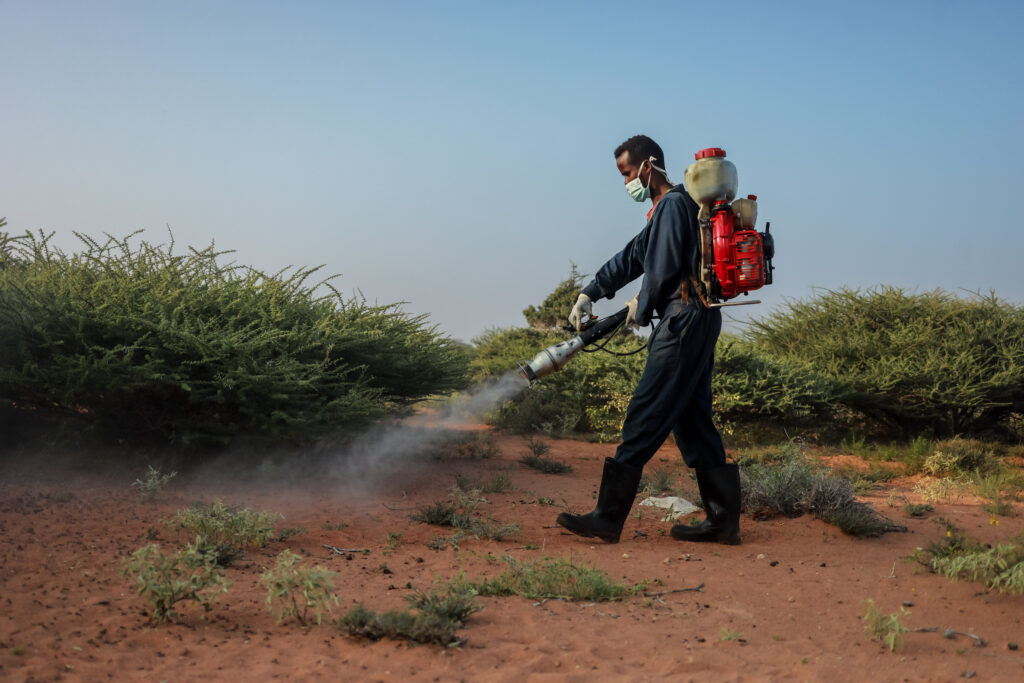
Something is happening in Africa.
Across the continent, a silent revolution is taking place as, one after another, countries are banning toxic pesticides.
This year alone, over 70 pesticides have been banned across four countries – Tanzania, Uganda, Madagascar, and South Africa – with Eswatini in the process of banning three more. This comes on top of bans in 2025 in other African countries.
The latest country is South Africa, who banned a deadly pesticide linked to the deaths of six children in late 2024. The children, aged between just six and nine, had eaten contaminated food. Their deaths caused a national outcry, with further investigations revealing that hundreds of people had been poisoned and killed by the same pesticide over the previous two years.
All of these countries have recognised that they have a problem with pesticide poisoning. But do we fully understand the true scale of the problem across Africa? And how much will these bans help?
Understanding the problem of pesticide poisoning in Africa
Pesticide poisoning is not just a problem in Africa, it is a global problem. Worldwide, 385 million people are accidentally poisoned with pesticides every year, resulting in 11,000 deaths. Additionally, around 150,000 people die from intentional poisoning, making pesticide ingestion one of the most common methods of global suicide.
Most cases of pesticide poisoning were thought to occur in Asia; however, CPSP’s work with African partners is uncovering worrying levels of pesticide poisoning across the continent.
It is however difficult to provide exact figures. Surveillance systems for pesticide poisoning vary across Africa and, in rural settings, people may choose to be treated within communities without official reporting.
It is particularly difficult to gather data on intentional poisoning or suicides, due to stigma and underreporting. In some African countries, attempted suicide is still criminalised, with families choosing to hide the truth out of fear.
What the data tells us
However, where data exist, we can see that Africa does indeed have a problem.
In Zimbabwe, research has shown that 43% of acute pesticide poisoning cases are due to moderately hazardous pesticides (as classified by the World Health Organization), while 26% are caused by highly hazardous pesticides.
In Togo, a recent study into poisoning cases at a regional hospital centre found that pesticides were responsible for over two thirds of poisoning cases. Furthermore, 86% of cases were a result of intentional self-poisoning.
In Tanzania, an investigation into hospital records found that nearly a fifth of patients admitted with pesticide poisoning died from their exposure.
Evidence from both Ghana and Nigeria highlights the problem of pesticide-related suicides. In Ghana, pesticides are estimated to account for one-third of all intentional poisoning cases, while media reports indicate that over half of all suicides in Nigeria involve pesticide poisoning.
What led African countries to ban pesticides?
Although these recent African bans have happened around the same time, each country arrived at its decision in a different way.
As previously mentioned, South Africa responded to a national outcry around one particular pesticide. Despite banning this pesticide, nearly 200 highly hazardous pesticides (HHPs) – pesticides which cause disproportionate harm to environment and human health – remain widely available in South Africa.
Tanzania took a more systematic approach. Its decision to ban 18 pesticides in January 2026 was the result of an investigation into the pesticides most responsible for poisoning and deaths in the country.
Unlike Tanzania’s country approach, Madagascar’s decision to ban 34 pesticides was based on recommendations from the regional strategy on HHPs. This was developed by the Southern African Pesticide Regulators’ Forum – a regional grouping of pesticide regulators – and formally adopted the previous year.
Will the pesticide bans work?
Governments always face significant pressure and push back on pesticide bans.
Farmers, who are used to using certain products, fear for their crops and livelihood. Pesticide manufacturers, fearing loss of income, lobby governments with claims that their products are necessary for agriculture and ‘safe’ when used correctly.
However, the truth is that pesticide bans are the most effective way to prevent poisoning and deaths. International evidence from countries that have already implemented bans – limiting access to highly toxic chemicals – clearly shows that lives are being saved.
Furthermore, when implemented carefully and correctly, there is no evidence that pesticide bans adversely impact agriculture. Safer alternatives exist.
As for industry’s claim that there their products can be used safely, there is conclusive evidence that ‘safe’ storage – an option that they regularly push instead of bans – does not work. Furthermore, farmers do not always understand the safety labels on bottles and protective equipment may be expensive or impractical.
Pesticide poisoning is often termed as farmer ‘misuse’ or ‘abuse’. However, from a human rights perspective, it is unfair to burden them with the responsibility of safety. These pesticides are inherently dangerous, extremely toxic to humans, and often have no known antidote. Governments must take on this responsibility and protect their citizens. The way to do this is through bans.
Will there be more pesticide bans in Africa?
Momentum is now building across the African continent, with more countries recognising that pesticide poisoning is an issue.
At a recent side-event on pesticide suicides at the Seventy-ninth World Health Assembly in Geneva, a representative from Nigeria spoke on the need to ban pesticides. Nigeria’s Ministry of Environment is working with CPSP to collect data on poisoning and review HHPs used in the country.
Zimbabwe is another country that has recognised the problem of pesticide poisoning. With CPSP’s support, it is working on developing a national HHPs strategy, identifying the most harmful pesticides still used in the country. This will support future decision making.
Similarly, Kenya is in the early stages of a project that will review pesticide poisoning cases. This builds on its existing national suicide prevention strategy, which recognises the threat of easy access to pesticides and includes a strategic objective to develop a pesticide control policy.
In Malawi, the Pesticide Control Board has taken a central role in pushing for reform. Government officials, health experts, police and researchers have recently met to shape a coordinated response to pesticide poisoning.
The East African Community – consisting of eight member states – has also recently adopted a national strategy for managing HHPs. This sets out key areas for action, including the identification of HHPs and updating policies and legislation.
We therefore hope to see further action soon.
What will the impact be?
Without getting too ahead of ourselves, there is good cause to be optimistic.
We know these pesticides are deadly, we know they are killing people, and we know that bans have worked in other countries.
If African nations continue to ban deadly pesticides, we would expect a significant impact on human health, with thousands of lives saved every year. It will also benefit the environment and biodiversity.
We will continue to support action across the continent and carefully monitor the results.

Dr Hellen Mbaya
CPSP Agriculture and Regulatory Adviser
Hellen has a PhD in Agriculture and Food Security focusing on Regulation, Traceability and Stakeholder engagement for Genome Editing Technology. She has previously worked as Biosafety Officer for the National Biosafety Authority, a government parastatal that regulates activities involving genetically modified organisms (GMOs) in Kenya.
She currently leads and supports country activities around understanding of pesticide poisoning, enhancing capacity of pesticide regulators.
Useful links
Recent bans and action
South Africa enacts ban on deadly pesticide
East Africa adopts a regional strategy on highly hazardous pesticides
Withdrawal of 130 pesticide formulated products with active ingredients categorized as highly hazardous pesticides (HHPs) in Tanzania (external link)
Evidence of pesticide poisoning in Africa
Pesticides are responsible for about 79% of poisoning cases in Malawi (external link)
An assessment of pesticide poisoning instances in Zimbabwe (external link)
Profile of acute poisonings at the Regional Hospital of Dapaong, Togo (external link)
18% of patients died as a result of pesticide poisoning in Tanzania (external link)
Pesticides are estimated to account for one-third of all intentional poisoning cases in Ghana (external link)
A two-year analysis of suicide reports in the Nigerian media (external link)
Evidence on the effectiveness of pesticide bans
Research shows ‘safe’ storage of pesticides does not prevent deaths (external link)
World Health Assembly side-event recognises pesticide suicide as a global problem