

The East African Community (EAC) – consisting of eight partner states – has officially adopted a new strategy on managing highly hazardous pesticides (HHPs).
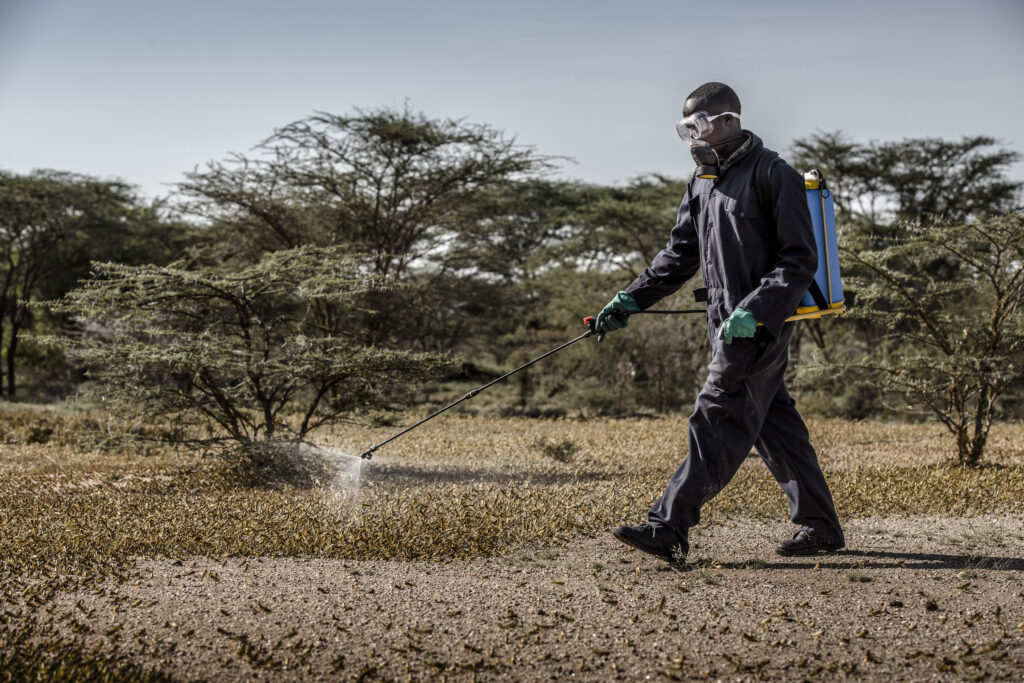
The strategy is intended to guide countries in East Africa to progressively phase out HHPs. To achieve this, it sets out a series of recommended actions for partner states, including
- Identification and prioritisation of HHPs
- Promoting the development and adoption of safe alternatives
- Strengthening the pesticide registration system
- Updating pesticide policies and legislations
- Strengthening monitoring and reporting of harm caused by pesticides
Indicators have been set to monitor progress and implementation over the next ten years.
The strategy covers HHPs used in both agriculture and public health, including pesticides used in public health programmes such as mosquito control for diseases like malaria. This reflects the recognition that the risks posed by HHPs extend beyond farming and require coordinated cross-sectoral action.
Highly hazardous pesticides: what are they and why is action needed?
Highly hazardous pesticides (commonly referred to as HHPs) are pesticides that cause disproportionate harm to human health and the environment.
All pesticides are toxic. However, while some are relatively low risk, others are extremely deadly to humans. Worldwide, an estimated 385 million people are accidently poisoned with pesticides every year, resulting in 11,000 deaths. Additionally, around 150,000 people die from intentional pesticide poisoning.
Research has shown that HHPs can be removed from agriculture, with no adverse impact on crop production. This is the most effective way to prevent poisoning and save lives.
While most HHPs are already heavily regulated or banned in Europe and other high-income countries, many HHPs remain widely available in low- and middle-income countries. According to the Food and Agriculture Organization of the United Nations (FAO), HHPs account for 6–10% of pesticides registered in low- and middle-income countries.
How can the regional strategy help?
While pesticide bans remain the responsibility of national regulators, the regional strategy has the potential to prompt and drive action.
National regulators often have limited resources and lack the capacity to examine and review individual pesticides registered for use within a country.
By bringing together a regional grouping of pesticide regulators – from Burundi, the Democratic Republic of the Congo, Kenya, Rwanda, Somalia, South Sudan, Tanzania, and Uganda – the EAC has strengthened capacity to assess the dangers of HHPs and how to manage them.
This collaborative process has informed the development of a regional strategy that goes beyond a one-time technical assessment. It provides a framework for continued cooperation, encouraging partner states to harmonise approaches to pesticide risk assessment, strengthen information sharing, and build technical capacity through a common regional approach.
The strategy promotes the identification, development, and adoption of safer alternatives to HHPs as countries work towards their progressive phase-out. If national regulators implement its recommendations, this is expected to lead to new pesticide bans.
Last year, the Southern African Pesticide Regulators’ Forum – another regional grouping of pesticide regulators – adopted a similar strategy on HHPs. Acting on its recommendations, Madagascar has introduced bans on 34 pesticides.
An opportunity to save lives and protect communities
Fredrick Otieno, from the Centre for Environment Justice and Development (CEJAD), CPSP’s delivery partner in Africa, which supported the development of the strategy, said:
“This strategy is the result of years of collaboration between pesticide regulators, technical experts and partner institutions across East Africa. It provides a shared roadmap for reducing the harms caused by highly hazardous pesticides while supporting countries to strengthen regulation and promote safer alternatives. The real measure of success will now be implementation.
“As partner states begin translating these commitments into national action, we have an opportunity to better protect farmers, farm workers, communities, biodiversity and future generations from preventable pesticide harm.”
Responding to the strategy’s adoption, Keith Tyrell, Head of CPSP Global Strategy, said:
“Congratulations to the EAC and all involved in the development of this new and timely strategy. Over the past couple of years, there has been growing momentum across Africa to tackle the problem of pesticide poisoning. We know that the majority of serious cases are caused by the availability and use of HHPs. It is therefore vital that action is taken to prevent further harm.
“We hope that individual countries now will act on the strategy’s recommendations – banning and phasing out these dangerous and deadly pesticides. Not only would this save lives and protect human health, it would also have a wider beneficial impact on the environment.”