

On 18 May 2026, the Centre for Pesticide Suicide Prevention (CPSP) supported an official member state-led side-event at the 79th World Health Assembly in Geneva: ‘A Global Pursuit of Suicide Prevention: Turning Evidence into Action’.

The event brought together Ministers of Health from Nepal, Sri Lanka, and Portugal, alongside representatives from Pakistan, Brazil, South Africa, United Arab Emirates, Nigeria, the World Health Organization, the International Association for Suicide Prevention, Zero Suicide International, and other leading experts, organisations, and government representatives from around the world.
Attendees, both in-person in Geneva and following online, heard expert perspectives and international examples of evidence-based approaches to prevent suicide and save lives.
Key discussion points included:
1. Cross-sector approach
There was broad consensus that suicide prevention should not be confined to the healthcare sector, but should be viewed and approached as a wider public health, societal, economic, and human-rights concern, which requires a whole government, cross-sector approach.
Portugal’s Minister of Health stated that, while suicide prevention must be embedded within health systems, it cannot be confined to them.
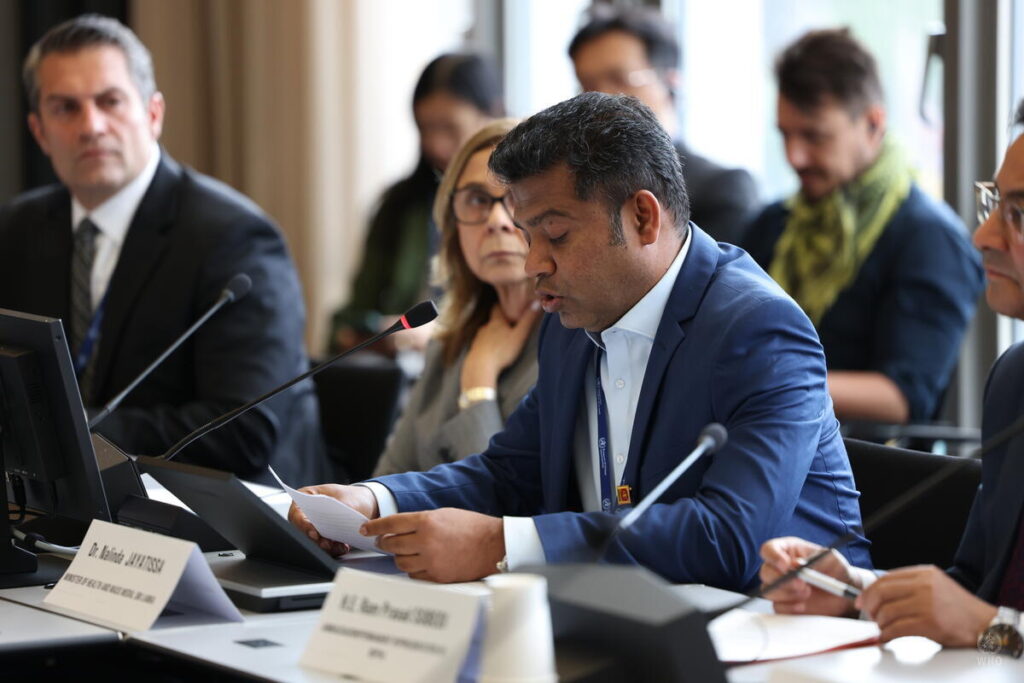
Sharing Sri Lanka’s experience, the country’s Minister of Health described how collaboration between the health and agriculture sectors had helped address pesticide suicides.
2. Learning from low and middle-income countries
Nepal’s Minister of Health highlighted the importance of recognising and sharing suicide prevention approaches being developed in low- and middle-income countries, ensuring that innovation in global health does not flow in only one direction. She noted that “some of the most practical, scalable, and integrated approaches to suicide prevention are being developed in low- and middle-income countries”.
This point was reinforced by Professor Jo Robinson, the President of the International Association for Suicide Prevention, who observed that while most suicides occur in low- and middle-income countries, the majority of suicide research is conducted in high-income countries.
Zero Suicide International provided a practical example, explaining how work in Pakistan had informed new approaches within school systems that were later adapted for use in the United States.
3. Pesticide suicide and means restriction
Pesticide self-poisoning was recognised as one of the leading causes of suicide, particularly in rural communities in low and middle-income countries.
Several countries described measures they had taken to ban or restrict access to highly hazardous pesticides, recognising means restriction as one of the most effective suicide prevention interventions.
Sri Lanka is frequently cited as a leading example of this approach. It’s Minister of Health and Mass Media explained how a targeted banning of highly hazardous pesticides over recent decades contributed to a dramatic decline in the country’s overall suicide rate.
Brazil shared how suicide rates in certain rural areas, where communities rely on tobacco farming and have easier access to highly toxic pesticide, can be twice as high as the national average.
Pakistan reported that 20-30% of suicides in the country are due to pesticide poisoning, mainly in rural settings, and that two thirds of people do not survive suicide attempts because of the high toxicity of the substances involved. Pakistan is now taking steps to ban certain pesticides.
Nepal and South Africa also outlined recent action to regulate highly hazardous pesticides. Nepal has banned 26 highly hazardous pesticides since 2019, while South Africa recently banning terbufos – a highly hazardous pesticide linked to many deaths.
The World Health Organization also emphasised the importance of means restriction, identifying it as one of the four key interventions in its LIVE LIFE implementation guide for suicide prevention. Mark Van Ommeran, Head of the Mental Health and Substance Use Unit at WHO, stated that ‘evidence for these interventions is staggering’. He added that if all countries banned highly hazardous pesticides, the world would likely meet the Sustainable Development Goal on suicide reduction. At present, we are not on track to meet this indicator.
4. Community care
Many countries also emphasised the importance of community-based approaches.
Portugal outlined recent reforms to its suicide prevention strategy, which have shifted the focus from institutional care towards community care. Similarly, Brazil explained that reforms introduced in 2022 had prioritised the development of community care networks, enabling more targeted support for different territories and communities.
Zero Suicide International also shared its Zero Suicide model for suicide prevention, which has been proven as a successful approach in reducing suicide rates significantly, also highlighting that not everyone is able to access formal healthcare systems. Drawing on lessons learned through its work in Europe, USA and Nepal, the organisation stressed the importance of reaching people within their communities and providing support where they are, apart from clinical setting. This includes building partnerships across the community sector and engaging with schools, refugee groups, veterans’ organisations, and prisons and jails, where people may be at increased risk of suicide.
5. External factors: social and commercial determinants
Social and commercial factors were also discussed throughout the session.
The President of the International Association of Suicide Prevention shared findings from a survey of young people in Australia, which found that poor mental health was attributed with cost of living, housing, climate, racism, global conflicts.
Brazil highlighted the strong correlation between suicide rates and wider social factors. Their representative noted that social exclusion and territorial insecurity have contributed to disproportionately high suicide rates among indigenous populations. In rural communities, socio-economic conditions have also worsened where there has been a shift from small-scale tobacco farming towards large tobacco companies.
Professor Jeremy Farrar, Assistant Director General of the World Health Organization also spoke about the importance of engaging with industry, stressing the need to ensure that commercial actors work with — rather than against — suicide prevention efforts.
6. Young people and early intervention
Young people were identified as a key group requiring targeted support and early intervention.
Portugal’s Minister of Health highlighted early intervention, along with prevention among young people, as two of the country’s three main priorities for suicide prevention.
South Africa’s representative shared their focus on increasing access to mental health services to facilitate early identification. She further emphasised the importance of resilience-strengthening interventions, including life skills development and education.
The importance of fostering life skills and strengthening early identification was also reflected in the World Health Organization’s LIVE LIFE implementation guide, where both are identified as two of the four core interventions for suicide prevention.
7. Decriminalisation and stigma of suicide
The importance of decriminalising suicide and reducing stigma was also a key theme throughout the session.
Representatives World Health Organization’s Pakistan office discussed the country’s decriminalisation of suicide in 2022. However, they noted that awareness of the legal change remains limited among law enforcement officers, with stigma continuing to persist. They further highlighted that certain religions still prohibit suicide, reinforcing the need to engage with community leaders.
A representative from Nigeria – where suicide is currently in the process of being decriminalised – shared similar experiences. He explained that some religious leaders regard suicide as a sin, while many families feel unable to speak openly about deaths within their communities.
CPSP’s Director, Professor Michael Eddleston, raised the impact of stigma on reporting and data collection. He explained that suicide data across Africa remains limited, with stigma contributing to underreporting. This presents a major barrier to understanding the true scale of the issue.
8. Media
Another key intervention highlighted in the World Health Organization’s LIVE LIFE implementation guide – the role of the media – was also discussed.
Sri Lanka’s Minister for Health and Mass Media described efforts to work closely with journalists to promote safe and responsible reporting of suicides.
Mark Van Ommeran of the World Health Organization reminded attendees that irresponsible reporting can contribute to imitation or ‘copycat’ suicides.
Professor Jo Robinson, President of the International Association of Suicide Prevention, also addressed the need to look beyond traditional media outlets and consider the impact that social media and artificial intelligence (AI) on suicide.
9. A deeply personal issue
Throughout the session, there were powerful reminders that suicide is a deeply personal issue. Through the sharing of personal experiences of loss, speakers highlighted that every death represents far more than a statistic. As the Minister of Health for Portugal put it, “each death represents a life lost, a family changed forever, and the community left with questions that no health system should or could ignore.”
More than anything, these stories reinforced the urgent need for collective action and a shared commitment to suicide prevention.
10. A call to action
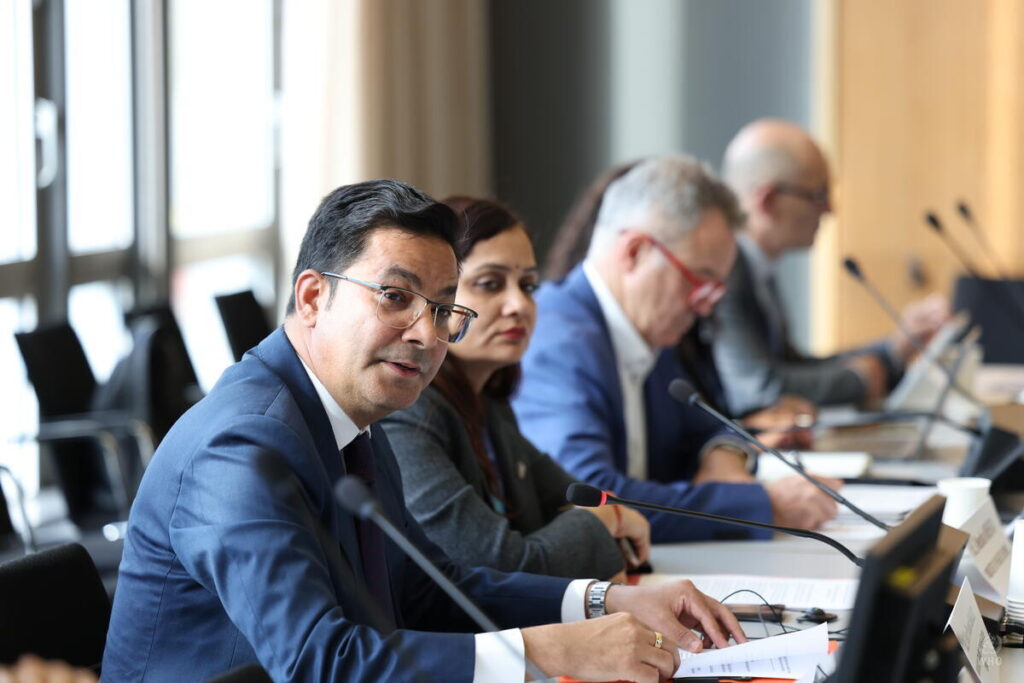
The event was chaired by His Excellency Mr. Ram Prasad Subedi, Ambassador and Permanent Representative of Nepal, who repeatedly emphasised the importance of turning evidence into action. He highlighted the value of sharing national experiences and concluded the session with a clear call for collective action on suicide prevention.
This message was echoed by many of the speakers. Professor Jeremy Farrar, Assistant Director of the World Health Organization, captured this sentiment in his remarks, stating that, “the responsibility of leadership is not what you say here, it is what you do when you leave.”
Watch a recording
Further information
CPSP also supported an additional side-event at the 79th World Health Assembly, ‘The Global Problem of Pesticide Suicides: The Time to Act is Now’.
This dedicated event focused on pesticide suicide as a major but preventable global public health problem. International speakers called for coordinated action across health, agriculture and regulatory sectors to phase out highly hazardous pesticides and save lives.
A summary and recording of this official event is available on our website.