

A new project has taken an important first step towards closing Indonesia’s evidence gap on pesticide suicides and supporting coordinated action across health and agriculture.
Warning: This article discusses suicidal behaviour. If you have questions on self-harm or feel suicidal, use this link to find an international helpline.
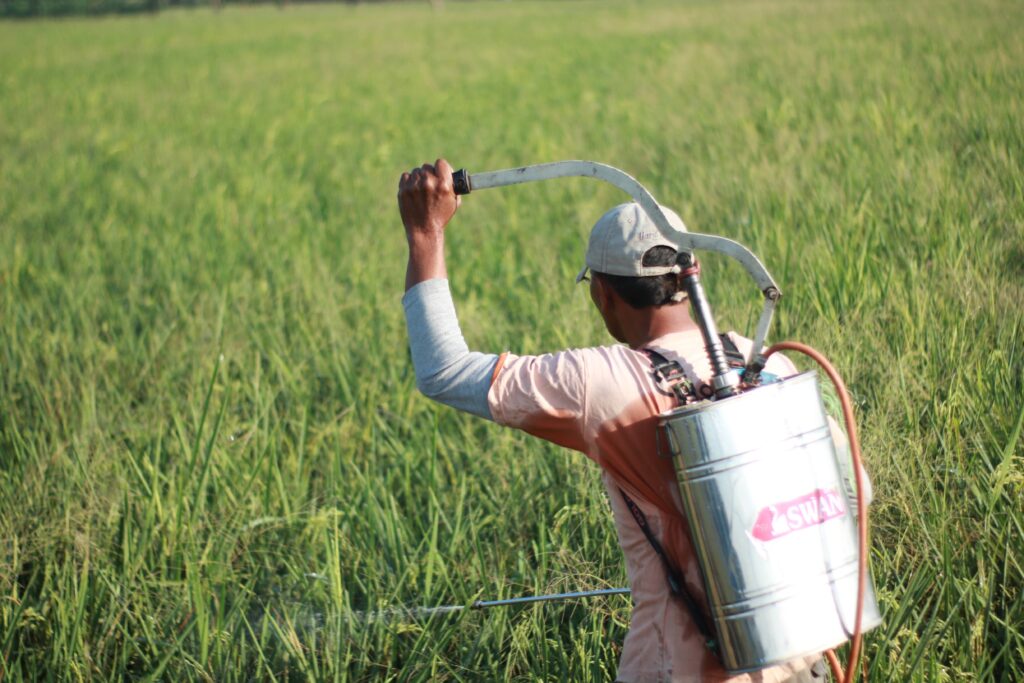
Pesticide self-poisoning is responsible for an estimated 14% of all suicides in Indonesia, making it the second most common method of suicide in the country.
However, while pesticide bans have been recognised as an effective suicide prevention strategy, there is little data on the circumstances surrounding these deaths. This includes vital evidence on which products are most responsible – information that is crucial for effective policymaking and regulation.
The project, led by Prof. Y. Andi Trisyono at the Universitas Gadjah Mada and Dr Sanderson Onie of Harvard Medical School and the Wellspring Center Indonesia, with support from the Centre for Pesticide Suicide Prevention, aimed to address this gap by collecting data to identify the most harmful pesticides responsible for suicide deaths in Indonesia.
The study included two complementary investigations: one focused on public health, exploring how deaths are recorded, and the other on agriculture, examining the availability of toxic pesticides.
It found that highly hazardous pesticides (HHPs) remain widely used and freely accessible in Indonesia, despite known risks. However, surveillance systems are fragmented and under-resourced, resulting in a lack of accurate data.
Lack of official data on pesticide suicides
The public health investigation highlighted a mismatch between the known scale of the problem and official recorded data. Despite engagement with hospitals, police, and community health centres, the team was unable to find accurate data on pesticide suicides.
Rather than the deaths not existing, the research team concluded that this was the result of fragmented and under-resourced surveillance systems.
This conclusion was supported by the agricultural investigation, which found that agriculture officers do not collect data on pesticide self-poisoning. Suicide reporting was regarded as outside their duties and there is no system connecting agriculture, police, and health.
Furthermore, deaths from intentional pesticide poisoning are often not recorded as suicides. This may be the result of stigma and shame, with deaths instead being documented as accidental and unintentional.
Availability of highly hazardous pesticides (HHPs) in Indonesia
The agricultural investigation also highlighted the continued availability of extremely harmful pesticides.
An examination of the pesticide registry found 18 highly hazardous pesticides (HHPs) – pesticides which cause disproportionate harm to environment and human health – registered for use in Indonesia.
Eight pesticides that are listed in Annex III of the Rotterdam Convention – dangerous pesticides that are subject to a prior informed consent (PIC) procedure – are also still registered.
In addition, the team found that some restricted-use pesticides, which should only be used under certain conditions, remained widely available. These products could often be bought from local vendors with few real restrictions.
The pesticide most responsible for deaths
The team conducted five field visits across Indonesia, including police, mental health, and general hospitals, as well as community health clinics (puskesmas). During these visits, paraquat emerged as a common pesticide responsible for deaths.
These findings were corroborated by a media analysis of suicide cases, which found that paraquat was the single most frequently mentioned compound linked to suicide.
Paraquat is a deadly pesticide, which is extremely toxic to humans. It has already been banned in over 70 countries worldwide. Despite being a ‘restricted-use’ pesticide in Indonesia, the study shows that it remains widely available.
Key recommendations
The research team has set out a number of key recommendations designed to close the data gap, promote cross-sector action, and restrict access to the most lethal pesticides.
Recommendations include:
- Limit access to highly hazardous pesticides, prioritising those identified as most responsible for deaths, such as paraquat.
- Pilot a self-harm and suicide registry, which would record evidence on specific pesticides used for self-poisoning.
- Build a linked, cross-sectoral reporting system for self-harm and suicide that connects agriculture, police, and health.
- Raise awareness of pesticide suicide and reduce stigma.
Why this research matters
Global research shows that pesticide bans are the most effective way to prevent deaths from pesticide self-poisoning. Limiting access to means of suicide, such as pesticides, is one of the four key interventions included in the World Health Organization’s LIVE LIFE implementation guide for suicide prevention.
In Indonesia, it is estimated that 1,264 lives could be saved each year by limiting access to highly hazardous pesticides. As deaths are underreported, it is likely that the true number could be much higher.
However, there has been little data on which pesticides are responsible for suicide deaths in the country, making it difficult for policymakers to act.
This research is the first step in closing this evidence gap. It provides crucial data on harmful pesticides still available in Indonesia and offers key recommendations to support further cross-sector action across the health and agriculture sectors.
Laying the foundation for future work
Dr Sanderson Onie, who co-led the study, said:
“There is little doubt that restricting highly hazardous pesticides would be one of, if not the most effective suicide prevention intervention available to us in the country. While overall suicide prevention is still in its infancy and there are many challenges, the support provided by CPSP has enabled us to take steps not only towards preventing pesticide suicides, but for suicide prevention as a whole.”
Professor Y. Andi Trisyono, who co-led the study, said:
“We faced challenges during this research, especially in data collection, and we are pleased to have formulated a sound report that serves as the baseline for future works. Pesticides remain an important pest control technology in agriculture and health sectors. However, their utilisation is often excessive and without proper protection equipment.
This study was limited to collecting data on deaths due to pesticide poisoning, while excluding the chronic impacts on human and environmental health. We are striving to conduct further studies and take the necessary actions to minimise the risks while maintaining agricultural production.”
Responding to the project findings to date, Professor Michael Eddleston, Director of the Centre for Pesticide Suicide Prevention, said:
“This is important research that lays the foundation for further work in Indonesia. Despite the challenges in data collection, the project clearly highlights the continued availability of highly toxic pesticides. This includes paraquat, an extremely deadly pesticide for which there is no antidote. It is worrying to see that, despite its restricted-use, paraquat continues to be the pesticide most responsible for deaths.
“We know from our work across the world that bans on the most harmful pesticides, eliminating them from use, are by far the most effective way to save lives. This can be done with no adverse impact on agriculture. We hope that this research, and further work by the team, can help support regulators in Indonesia to take action and prevent further unnecessary deaths.”
Further reading
How pesticide poisoning became a global health problem
New study highlights global efforts to regulate deadly pesticide