

GUEST BLOG: Ahead of the premiere screenings of KUYO: The Sadness We Carry, a new documentary exploring suicide, grief and healing in Kenya, CEJAD’s Patricia Kombo reflects on her experiences researching the film and listening to the stories of families bereaved by suicide.
Warning: this article discusses suicide, which some people may find distressing. To find a local helpline, please visit www.findahelpline.com
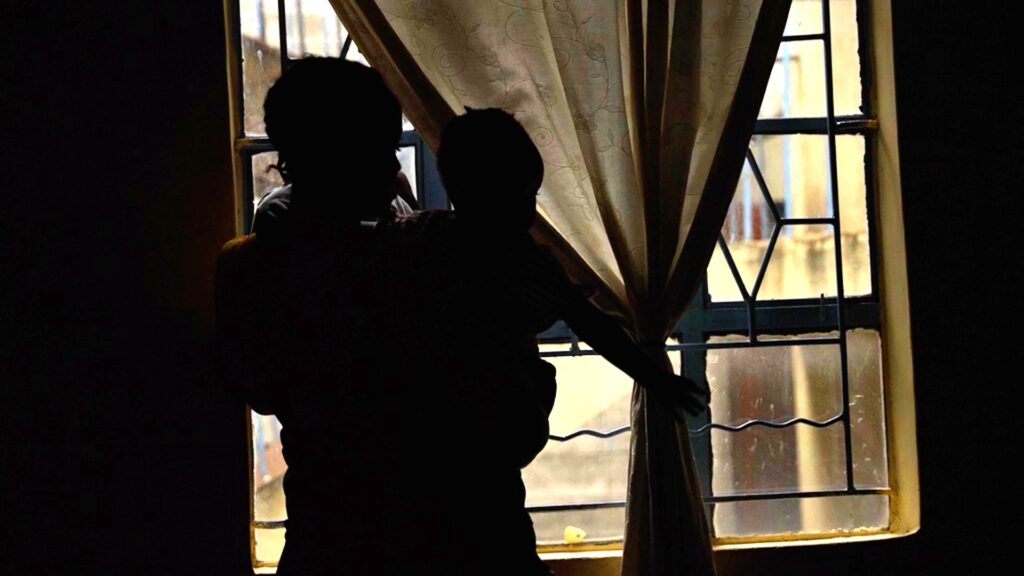
As we prepare for the first-ever screenings of our new documentary, KUYO, I find myself reflecting on a year spent entering some of the most painful rooms I have ever known – and sitting in the living rooms of families, spouses, and friends left behind after someone they loved died by suicide.
My entry into this work was almost accidental. I was part of the team at the Centre for Environment Justice and Development (CEJAD) organizing the first screening in Kenya of Her Name Was Sita, produced by Heshani Sothiraj Eddleston, exploring suicide, shame and stigma in Nepal. Alongside this, I also supported pre-production research for her next film, which sought to explore how people grieve after a suicide and the impact of laws that criminilized suicide.
At the time, I was the Communications Officer for CEJAD, and my job was logistics: finding mental health organizations that offer support, locating psychiatrists to speak on panels, securing survivors willing to share their stories, and scouting a suitable venue to screen the film.
The impact on those left behind
It is one thing to watch suffering on a screen, at a comfortable distance, feeling something and then moving on, but it is another thing to sit across from someone to listen to and watch unfiltered emotions as they describe the day their world ended.
For Mercy*, not her real name, her words have stayed with me since. Having lost her husband to suicide, she described the response of the people around her as the greatest betrayal she had ever experienced. “How do you mourn in a society that discriminates against your grief and spreads judgement instead of comfort? How do you explain to your children why their father is never coming home, yet he was trending on all social media?”
Across every interview, one truth kept surfacing: it never happens as a single, sudden event. There are always signs. And one lesson reframed how I speak about this subject entirely: people do not “commit” suicide; they die by suicide. Language matters, because the word “commit” borrows from crime, and grief is not a crime scene.
Our story met a woman who only found out about her husband’s suicide through Facebook while she was waiting in the delivery room. She then faced discrimination by her family and friends. Carol, not her real name, was then denied the right to grieve in the way that felt natural to her, because in her community it is considered taboo for a breastfeeding mother to let her tears fall near her children.
I learned that grief is never universal. Community, culture, and religion shape it, and they all converge. It is often painful around a suicide death, which is seen as a bad death.
In some communities, when a person dies by suicide, rituals are performed to cleanse the spirits and restore peace, treating the death as a bad omen. In some communities we visited, trees were cut down, and burials are sometimes held in the evening or under cover of darkness, without ceremony or dignity typically extended to the dead. In some cases, the surviving family is shunned entirely, out of fear that misfortune will spread to the wider community. In some communities, entire lineages can be stigmatized for generations, quietly marked as unsuitable for marriage.
Religious practices that punish
Religion compounds this in its own way.
In conversations with Catholic, Islamic, Buddhist, Hindu, Pentecostal, and traditional healers about how their congregations bury members who have died by suicide, a common thread emerged. While each faith affirmed that life is sacred and should never be taken, doctrine and the individual officiant often determine whether a person receives a religious burial at all. In some traditions, a death by suicide is treated as a sin, and the person is denied burial by a religious leader.
According to the Catholic faith, which is guided by canon law, life is sacred, and suicide is seen as a serious moral issue. For centuries, those who died by suicide were denied church funerals. However, that changed in 1983 when Pope John Paul II revised the canon law to emphasize mercy and care for grieving families. Suicide was still considered wrong, but the church recognized that psychological factors could reduce personal responsibility.
For families, this refusal does not stay contained in ritual. It becomes another layer of punishment for people who had no part in the death. As one line of reasoning goes, God is described as near to the brokenhearted, yet the brokenhearted are often the ones being punished.
What gets lost in all of this is the reality that many of these deaths follow patterns that families and communities never learned to recognize: the quiet erosion of a mental illness, mistaken for weakness, sin, or failure. When religious and social institutions abandon grieving families at the exact moment, they need support most, the isolation compounds, sometimes with devastating consequences of their own.
The cost of public judgement
As a communicator and as someone who has, admittedly, shared things on social media without a second thought, one case forced me to confront my own habits.
Many will remember the video of a police officer, visibly intoxicated and in uniform, walking down a street in 2022. The video went viral within seconds. The comments were merciless, and his superiors summoned the officer. That same night, he died by suicide.
The public narrative, shaped entirely by a few seconds of footage. The real story, uncovered only when I sat with his widow, was entirely different.
Their marriage had been, on her account, genuinely happy. That changed after a school trip in Nyeri ended in a road accident that killed the couple’s firstborn son, the only fatality in that accident. From that point, depression took hold. But the signs were misread. The family assumed time would heal him, and it was just grief. He turned to alcohol not as recklessness, but as an attempt to numb and unbearable grief no one had helped him name or process. To colleagues, to the public, and eventually to his employer, it looked like addiction and incompetence, but he was a man in the grip of untreated trauma.
Then came the video. Then came judgement, on a scale, from strangers, him being summoned the same evening while intoxicated; then came a decision from which there was no return.
We rarely know what “last straw” someone else is carrying.
His widow described what followed as a second injustice. Within the police service, a death classified as suicide forfeits the family’s entitlement to benefits, which means no compensation, no honors, and none of the dignity typically afforded to an officer who served faithfully for over twenty years. He was, in her words, buried without ceremony. The loss of a husband and a breadwinner was devastating enough, but the additional financial and institutional punishment made it immeasurably worse.
A legal shift and gaps in practice
In January 2025, the High Court of Kenya ruled that attempted suicide is no longer a crime but a public health and human rights issue. Where survivors of a suicide attempt once faced prosecution, they are now, at least on paper, directed toward mental health support instead of a courtroom. In the past, if you’re thought to have attempted suicide, the police used to arrest you, and if you end up in a hospital, you’ll end up in the section for criminal patients.
But according to Dr Catherine Mutisya, a psychiatrist at Mathare National Teaching and Referral Hospital, systemic discrimination persists in other forms. Some insurance providers penalize hospitals or patients when a case is formally documented as a mental health issue, pushing doctors to record alternate diagnoses simply to protect patients from that discrimination.
Decriminalization was a meaningful acknowledgement that a suicide attempt is not a criminal act but a cry for help, a symptom of a treatable illness rather than a character flaw. But the surrounding systems around insurance, employment benefits, religious institutions, and community structures have not caught up to that same understanding of decriminalization.
When I was growing up, a death by suicide was rare enough that it stood out sharply in memory. Today, such stories arrive with unsettling frequency. It raises hard questions. Are we too harsh with one another? Are we listening carefully enough? Are economic pressures, unemployment among educated young people, and the rising cost of living pushing people past a breaking point we don’t see coming? Have we built spaces where someone can say, ‘Honestly, I am struggling,’ without fear of judgement?
A call for compassion
If there is one message worth carrying out of a year spent in this work, it is that families left behind after a suicide death carry an unbearable weight already. They do not need to be asked what they did wrong. They need compassion, not interrogation.
When communities and institutions withdraw from grieving families instead of supporting them, they risk deepening the very isolation that can contribute to further suicidal thoughts within that family, a pattern researchers and clinicians have long observed in households already touched by this kind of loss.
There is real, free support available through psychotherapy organizations for anyone struggling, whatever form that struggle takes. Some of free toll numbers to call include 999/112/911 or befrienders Kenya.
There are things every one of us can watch for in the people around us: sudden withdrawal, a decline in self-care, unusual irritability, and disengagement from things they once cared about. You might not be the therapist but you can notice, ask the person , listen to them, connect them with help and follow up.
Masculinity carries a particular burden in this conversation. Men are frequently socialized to suppress emotion rather than express it, and that suppression, sustained long enough, can become its own breaking point. Everyone, regardless of gender, needs space to feel and release emotion as it comes, not store it until it becomes unbearable.
The smallest gesture of kindness toward someone who may be struggling could matter more than we know. Reaching out for mental support is not a weakness; it is the beginning of being heard. Help is always available.

Patricia Kombo
Communications Adviser, Centre for Environment Justice and Development (CEJAD)
Patricia Kombo is a public communications professional and climate change advocate, serving as Communications Adviser at CEJAD. Her work focuses on strategic communication and public awareness on environmental health, pesticide poisoning and impacts of highly hazardous pesticides on human health and the environment. She is currently pursuing a master’s degree in climate change and adaption at the University of Nairobi, further strengthening her expertise in climate action, environmental sustainability, and evidence-based advocacy.
Find out more
The documentary will be officially released with screenings and discussions in Nairobi on Friday 23 October and Kisumu on Saturday 24 October. For further information and to book your place, click here.
News: Trailer released for new documentary exploring the hidden costs of suicide in Kenya
Watch the trailer