

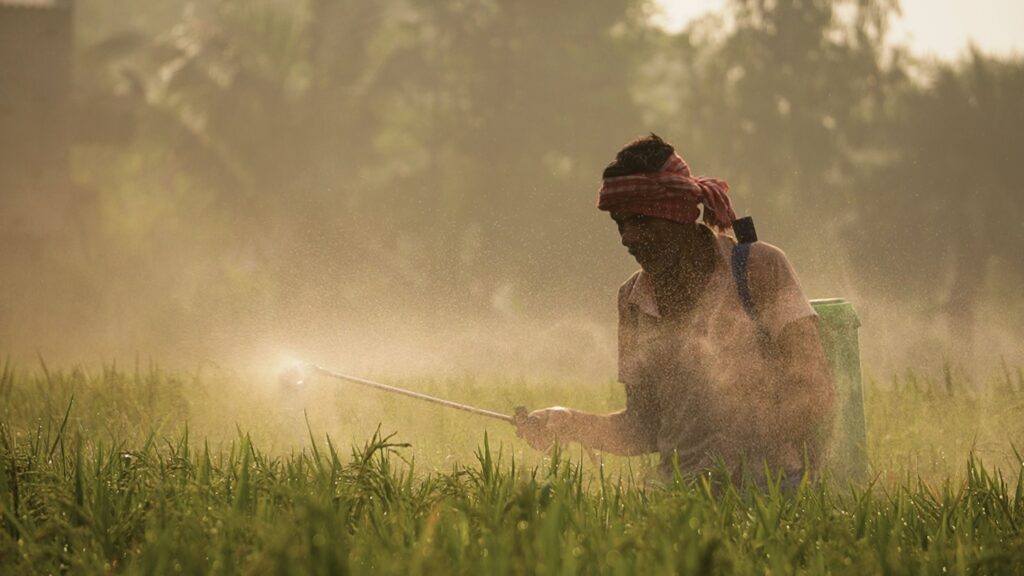
A nationwide ban has been announced on a highly controversial and deadly pesticide in India.
Warning: this article discusses suicide, which some people may find distressing. To find a local helpline, please visit www.findahelpline.com
The Government’s decision follows a draft banning order and consultation process announced in July this year.
The new regulations prohibit the registration of the pesticide and cancels all existing registrations. State governments have also been directed to implement the order.
The pesticide is highly toxic, with no known antidote. It has already been banned in over 70 countries worldwide, due to its impact on public health.
Multiple Indian states, including Kerala, Odisha, Telangana and Andhra Pradesh, have already taken action to limit access to the pesticide, through temporary bans. However, only the Central Government has the power to implement permanent bans on pesticides.
Data from India’s National Crime Records Bureau (NCRB) consistently shows that poisoning – particularly pesticide ingestion – is one of the leading methods of suicide in India. This is due to easy access to acutely toxic highly hazardous pesticides.
This particular pesticide, paraquat, has been responsible for a disproportionate share of poisoning cases and deaths in India. Doctors, policymakers, researchers, and community groups have recently called for further action by the Central Government.
Responding to the ban, Professor Michael Eddleston, Director of the Centre for Pesticide Suicide Prevention, said:
“Congratulations to India’s Central Government on this significant decision. Pesticide poisoning has long been a serious problem in India. Paraquat has become a particular issue, out of nowhere, over the last five years. With no known antidote, the most effective way to protect vulnerable people is to limit access to the pesticide.
“Over the past few years, we have seen an increasing number of Indian states introduce temporary bans on paraquat. While these measures have been important, their impact has inevitably been limited. This nationwide, permanent ban has the potential to make a far greater difference. Many thousands of lives will be saved as a result of the Government’s decisive action.”
Further reading
BLOG: From dialogue to action: how an Indian state banned a deadly pesticide
BLOG: Pesticide poisoning in India: prevalence, challenges & opportunities
PUBLICATION: Paraquat at 63—the story of a controversial herbicide and its regulations (external link)
NEWS: Deadly pesticide’s ‘safety measure’ does not prevent deaths, a breakthrough study shows
NEWS: Deadly pesticide can be replaced by safer alternatives, new study shows